

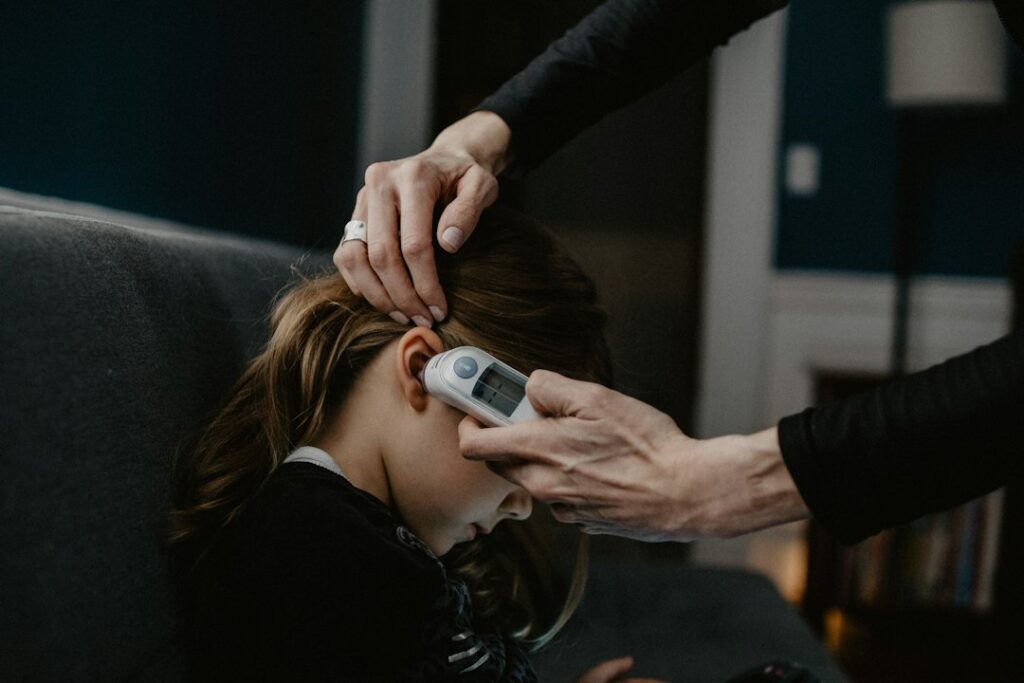
A thermometer can provide useful information, but the number is only one part of understanding how sick a child may be. Age, measurement method, behavior, breathing, hydration, and other symptoms all matter.
What temperature counts as a fever?
For most children, a temperature of 100.4°F (38°C) or higher is considered a fever when measured rectally, by forehead, in the ear, or by mouth. A temperature taken under the arm is less precise and may need confirmation with a more reliable method. ([healthychildren.org](https://www.healthychildren.org/english/health-issues/conditions/fever/pages/how-to-take-a-childs-temperature.aspx?utm_source=openai))
A fever is not automatically dangerous. It is often a sign that the immune system is responding to an infection. The child’s appearance and behavior are important: a child who is drinking, responsive, and breathing comfortably may need different care from a child with the same temperature who is difficult to wake or struggling to breathe.
A temperature of 98.6°F is an average, not a required “normal” number. Body temperature naturally changes with the time of day, activity, clothing, and the measurement site.
Which thermometer is safest for children?
A digital thermometer is the preferred choice. Mercury thermometers should not be used because they can break and release toxic mercury. Keep the thermometer clean according to its instructions, and consider labeling separate thermometers for oral and rectal use. ([healthychildren.org](https://www.healthychildren.org/english/health-issues/conditions/fever/pages/how-to-take-a-childs-temperature.aspx?utm_source=openai))
The best method depends on the child’s age:
- Rectal: Most accurate, especially for infants younger than 3 months.
- Forehead or temporal artery: Convenient for children of any age when used exactly as directed.
- Ear: Generally appropriate for children 6 months and older; placement matters.
- Oral: Usually practical around age 4 or older, when a child can keep the thermometer under the tongue safely.
- Armpit: Useful for screening, but the least accurate of these common methods.
If a reading does not match how the child looks or feels, repeat it using a more reliable method. Record the number, time, and measurement site so the information is clear if medical advice is needed.
How do you take a rectal temperature safely?
Rectal measurement is often the most dependable option for young infants, but it requires care.
1. Use a digital thermometer designated for rectal use.
2. Clean the tip as directed.
3. Place a small amount of lubricant on the tip.
4. Position the infant on the back with the legs gently raised, or belly-down across an adult’s lap while keeping the child secure.
5. Insert the tip gently—about one-half inch for babies younger than 6 months. Never force it.
6. Stop immediately if there is resistance, pain, or significant movement.
7. Hold the thermometer in place until it signals that the reading is complete.
Never leave a child unattended during a rectal temperature check. Do not use the same thermometer for rectal and oral measurements unless it has been thoroughly disinfected and is specifically designed for both uses. Separate, clearly labeled thermometers reduce the risk of accidental misuse. ([healthychildren.org](https://www.healthychildren.org/english/health-issues/conditions/fever/pages/how-to-take-a-childs-temperature.aspx?utm_source=openai))
How should forehead, ear, oral, and armpit temperatures be taken?
Each method can work well when used correctly.
Forehead thermometers: Follow the device instructions about distance, positioning, and where to scan. In a warm climate such as Kaufman, a child coming indoors after outdoor heat, direct sunlight, or vigorous play may have a temporarily altered forehead reading. Let the child rest in a comfortable indoor setting and repeat the reading if it seems unexpected.
Ear thermometers: Use them only when the child is old enough for the device and follow the instructions for positioning. A reading may be affected by incorrect placement, earwax, or coming indoors after exposure to cold outdoor air. The American Academy of Pediatrics advises waiting about 15 minutes after coming inside from cold conditions before taking an ear temperature. ([healthychildren.org](https://www.healthychildren.org/english/health-issues/conditions/fever/pages/how-to-take-a-childs-temperature.aspx?utm_source=openai))
Oral thermometers: Wait about 30 minutes after a hot or cold drink. Place the tip under the tongue toward the back, and have the child keep the lips closed without biting the thermometer. ([healthychildren.org](https://www.healthychildren.org/english/health-issues/conditions/fever/pages/how-to-take-a-childs-temperature.aspx?utm_source=openai))
Armpit temperatures: Place the tip high in the center of a dry armpit and hold the child’s arm snugly against the body. Because this method is less accurate, a high or borderline reading should generally be confirmed with a forehead, ear, oral, or rectal measurement when appropriate.
Do not rely on feeling the forehead, forehead strips, or pacifier thermometers to confirm a fever. These methods can miss or misrepresent the child’s actual temperature. ([healthychildren.org](https://www.healthychildren.org/english/health-issues/conditions/fever/pages/how-to-take-a-childs-temperature.aspx?utm_source=openai))
When is a child’s temperature an urgent concern?
For a baby 3 months old or younger, a rectal temperature of 100.4°F (38°C) or higher requires prompt medical advice, even if the baby otherwise seems comfortable. Infants can become seriously ill without many visible symptoms. ([healthychildren.org](https://www.healthychildren.org/english/health-issues/conditions/fever/pages/fever-and-your-baby.aspx?form=HealthyChildren&utm_source=openai))
Seek urgent medical help for a child of any age who has a fever and:
- Is difficult to wake, confused, unusually limp, or not responding normally
- Has trouble breathing, bluish lips, or skin pulling in around the ribs
- Has a stiff neck, seizure, severe headache, or a concerning rash
- Has repeated vomiting or diarrhea
- Shows signs of dehydration, such as very little urination, no tears, dry mouth, or inability to keep fluids down
- Appears seriously ill even if the thermometer reading is not especially high
- Has a temperature repeatedly above 104°F (40°C)
- Has a weakened immune system or takes medicines that suppress immunity

A temperature can also rise from being overdressed, exercising, or spending time in a very hot environment. If a child may have been overheated in a vehicle, poorly ventilated room, or during extreme outdoor heat, treat that as a potential emergency rather than assuming it is an ordinary infection-related fever.
How should parents interpret the number?
Avoid judging illness severity from the temperature alone. A child’s comfort, alertness, fluid intake, urination, breathing, and symptoms often provide more useful context.
For example, a child with 102°F who is awake and drinking may be less concerning than a child with 100.4°F who is very sleepy, breathing rapidly, or refusing all fluids. Fever medicine is generally used to improve comfort, not necessarily to make the temperature return completely to normal. Do not give aspirin to children, and ask for age- and weight-appropriate guidance before giving medicine to a young infant. ([medlineplus.gov](https://www.medlineplus.gov/ency/patientinstructions/000319.htm?utm_source=openai))
Light clothing, regular fluids, and rest are usually more helpful than cold baths, ice, or alcohol rubs. Those cooling methods can cause shivering or other problems. In homes that become warm during summer power interruptions or heavy heat, cool the environment safely and monitor the child closely for overheating.
What information should be recorded?
Write down:
- The temperature and exact time
- How it was measured
- The child’s age and weight, if medication questions arise
- Symptoms such as cough, pain, vomiting, rash, or breathing changes
- Fluid intake and urination
- Any fever-reducing medicine, including the time and amount
This simple record helps distinguish a single unusual reading from a persistent fever and gives a pediatric clinician clearer information if advice is needed. When the measurement method is uncertain, repeat the temperature with a dependable digital thermometer rather than trying to mentally “adjust” the number.
This information is educational and does not replace individualized medical advice, particularly for infants, children with chronic conditions, or any child who appears seriously ill.